




Blog
3 September 2026
The dementia care techniques our Caregivers use every day
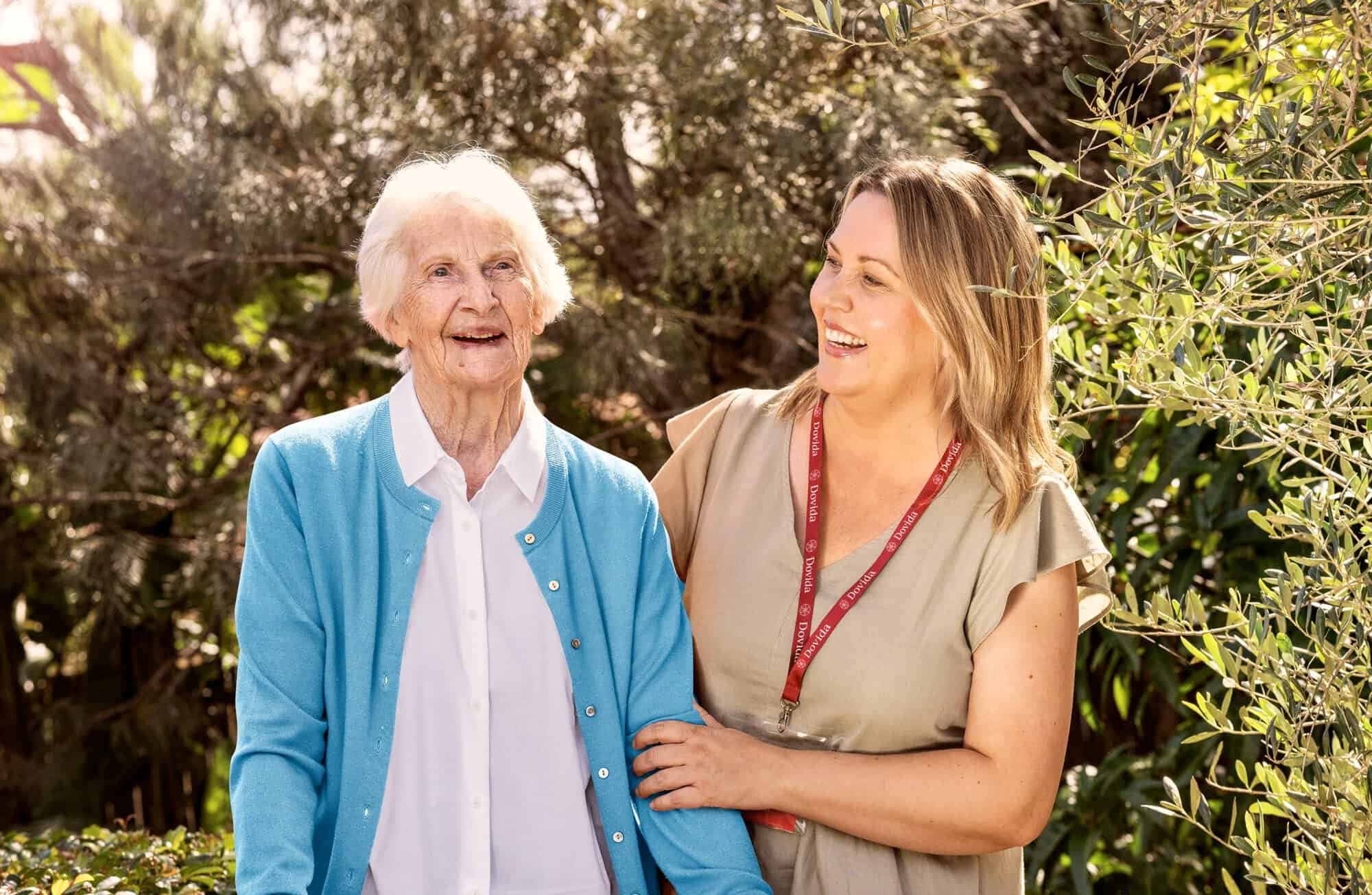
By Aisling Cooke, Dovida National Caregiver Training Manager
Supporting a loved one living with dementia can be both a rewarding and challenging experience. As dementia progresses, families often find themselves navigating changes in memory, communication, behaviour, and daily routines. These are many of the same challenges that Dovida Caregivers are trained to deal with every day.
Dovida Caregivers provide valued care and support to people living with dementia all over Ireland, helping them remain independent and connected to their families, friends, and communities. That’s why dementia training plays such an important role in preparing our Caregivers to deliver compassionate, person-centred care.
Dementia training equips our Caregivers with the knowledge and tools to communicate effectively, and the understanding to anticipate the needs of their client, how to deliver care with respect and empathy, and how to support the client’s dignity, privacy, and autonomy.
While this training helps our Caregivers support clients living with dementia, many of the same principles can also be helpful for family members caring for a loved one at home.
Understanding dementia
Dementia is an umbrella term for a group of symptoms that affect cognitive function, which is how the brain processes, stores, and uses information.
While memory loss is often the most recognised symptom, dementia can affect many aspects of daily life, including:
- Memory and recall
- Communication and word finding
- Planning and problem solving
- Judgement and decision-making
- Understanding time and place
- Mood and personality
Our Caregivers treat all of our clients with kindness and empathy while helping them navigate their day. They treat our clients as they would like their loved ones to be treated. Our Caregivers try to put themselves in the client’s shoes, all the while remaining patient.
Knowing the person’s story
Knowing the person’s life story helps shed light on how to provide support today. Short-term memory loss is an early symptom of dementia, but the person may be able to recall long-term memories. Triggering these long-term memories by asking questions about any past hobbies or interests can open up the opportunity for the client to tell stories about their life.
Talking about positive experiences from the person’s past can make them happy in the present and offer comfort and moments of joy.
Techniques our Caregivers use to put clients at ease
Many of the techniques our Caregivers learn throughout their training are simple but very effective in managing dementia symptoms. They are also applicable to family members caring for loved ones in the home.
- Offering compliments – gives joy, supports dignity and builds self-esteem.
- Asking the person’s opinion – reassures our clients that they are valued and their opinion matters when they may feel they have lost their significance.
- Avoid arguing – What our clients are feeling and experiencing is very real to them; correcting or arguing with them is unlikely to reduce their distress and can sometimes make the situation worse.
- Avoid embarrassing them – Try not to draw attention to their mistakes. Small moments of kindness and sensitivity can help preserve confidence and dignity.
- Doing things together – promotes independence and allows the person to experience a sense of accomplishment.
A person living with dementia can also experience changes in their behaviour or personality that can be difficult to understand.
If a person is feeling particularly upset or fixated on something, shifting the focus of the conversation can often have a positive effect. This technique, known as ‘redirecting’, follows three simple steps.
- Seek to Understand – Try to understand what the person is feeling and what may be causing their distress.
- Validate and Acknowledge – Validate their feelings and acknowledge their emotions, even if they do not make sense to you. You can do this by saying simple statements such as: “I’m sorry you are feeling upset.”
- Redirect or Distract – Change the subject to a different topic that is comforting to the person. This is where knowing about the person’s life story can be particularly effective.
Activities that promote connection
Activities are also useful tool in redirecting. They can provide moments of fun and happiness that play an important role in helping the person feel safe, secure and valued.
Doing activities like making jigsaw puzzles, singing, listening to music, gardening, looking through magazines or photo albums, watching quiz shows, and arts and crafts can build safe esteem by engendering a sense of purpose and accomplishment, even if the activity is a relatively simple one.
An individual journey
Everyone’s journey with dementia is different, and what helps one person may not help another. However, the principles that underpin dementia care remain the same.
Our Caregivers make a difference to a person living with dementia and their families by remembering the unique individual that they are and supporting them through good communication, active listening, kindness, empathy, and respect. These same principles can be used by anyone caring for someone living with dementia and help them to continue living as comfortably as possible in the place they call home.