



News
14 August 2025
Ireland’s statutory home support scheme – nine critical questions that must be addressed
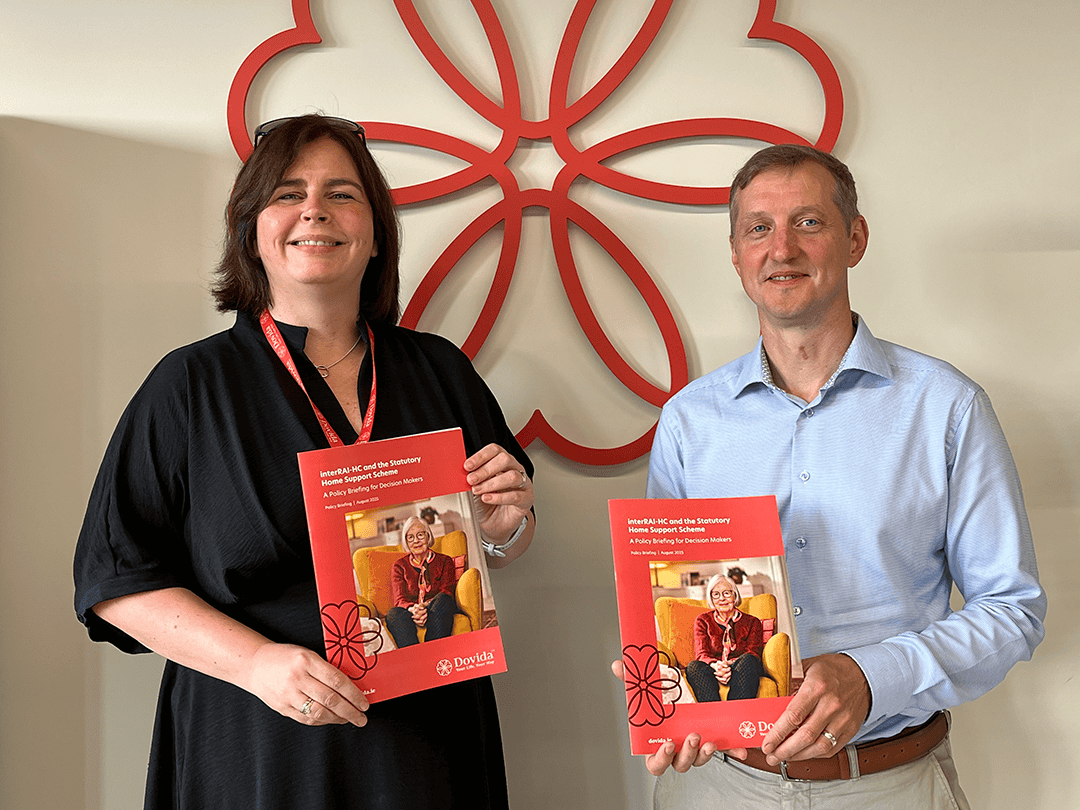
As Ireland moves towards the potential implementation of a statutory home support scheme, Dovida is proud to publish a new policy briefing that contributes to this critical national conversation.
interRAI-HC and the Statutory Home Support Scheme
The paper outlines nine crucial questions that need to be addressed, including Ireland’s decision to use the interRAI assessment tool and how home support providers like Dovida can support its implementation at scale. Central to the briefing are the principles of equity, person-centred support and responsiveness – with consideration given to how these can be ensured in the forthcoming scheme.
Our briefing is accompanied by a foreword from Professor Kathy Eagar AM, Adjunct Professor at the University of New South Wales and Queensland University of Technology. Professor Eagar is internationally recognised for her work on aged care funding systems and previously led the design of Australia’s National Aged Care Classification (AN-ACC) model. Her endorsement highlights the paper’s relevance not only within Ireland but in the broader global debate on long-term care reform.
Shaping the future of home support in Ireland
Our paper poses nine key policy questions that must be addressed to ensure Ireland’s statutory scheme delivers more than just a legal entitlement – it must offer timely, meaningful and effective support to those who need it.
Drawing on international evidence, the OECD’s (2025) comparative review, and anonymised frontline case studies, it tackles critical concerns including:
- The need for a national legal definition of home support in order to build a transparent, nationally governed system that is legally and financially sustainable
- Whether interRAI is the right tool to assess diverse needs across age groups
- How assessment data should translate into equitable funding and service levels
- The important role independent providers must play in assessment and care planning
- The risks of confusing eligibility with need and how to avoid them
Equity, voice and quality must be embedded from the outset
This policy briefing highlights that the success of the statutory home support scheme will not only depend on what is implemented, but also on how.
Assessment must support, not replace, individual voice and in doing so, services must reflect both clinical and social needs. Furthermore, non-HSE providers – who deliver the vast majority of home support across Ireland – must have access to the systems that shape care decisions.
Indeed, they have the potential to support the HSE to undertake the assessment and reassessment process and help to address HSE shortfalls in hitting interRAI targets over the last number of years.
We also highlight the urgent need to close existing gaps, particularly for people under 65, those with mental health needs, and individuals whose needs fall between existing service silos.
(Pictured above – Dovida’s Kathy McLoughlin and Michael Wright)