


Blog
7 April 2026
Listening to lived experience – Reflections from the Spinal Injuries Ireland Empowerment Summit
Kathy McLoughlin – Director of Disability Services, Dovida
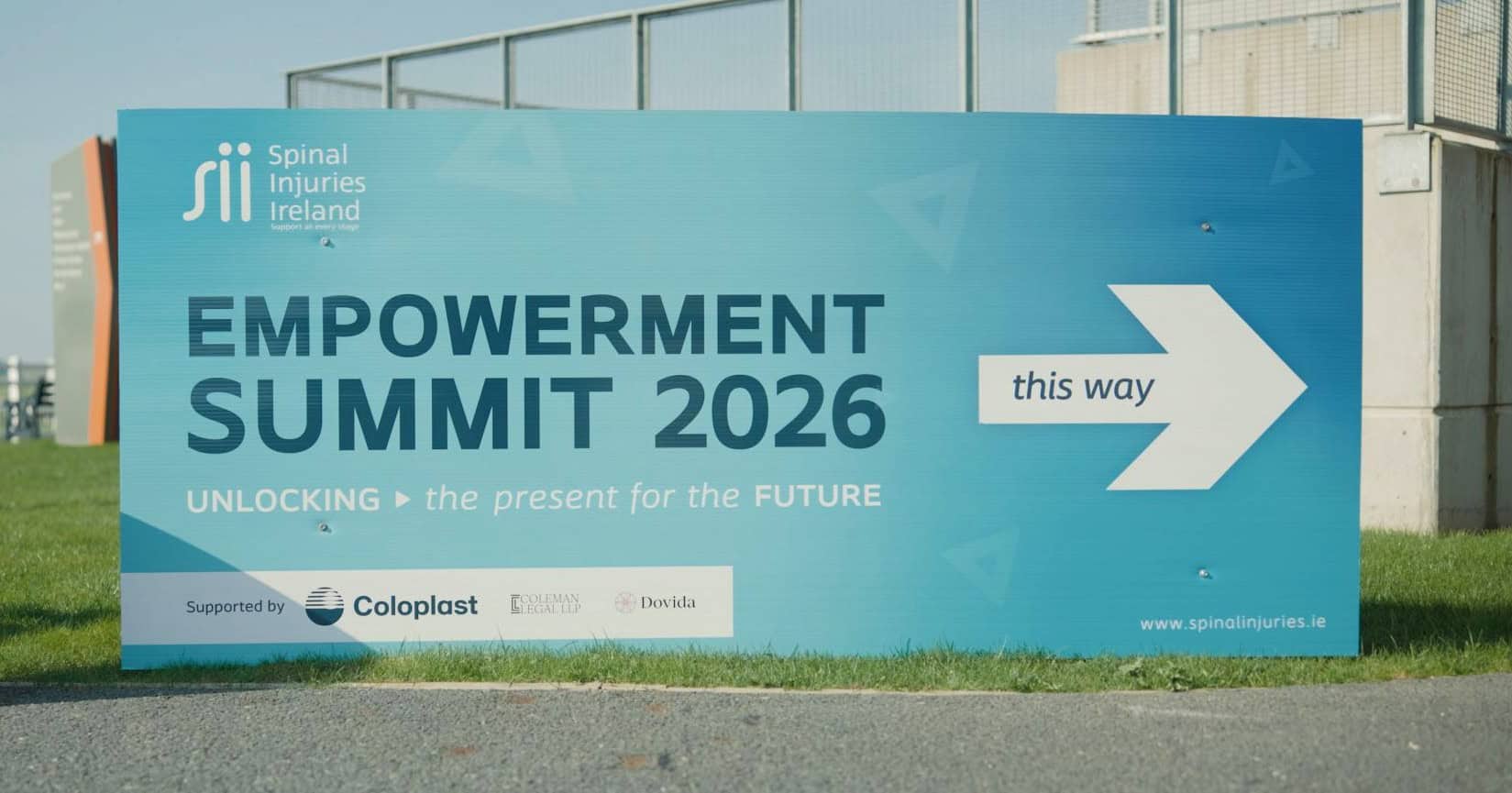
The Spinal Injuries Ireland Empowerment Summit 2026 brought together healthcare professionals, service providers, and members of the spinal cord injury community at The Curragh Racecourse for a day focused on lived experience, innovation, and collaborative problem-solving.
Dovida was proud to sponsor this year’s event and to support organisations committed to improving life after spinal cord injury.
The summit featured a broad range of contributors across rehabilitation, advocacy, technology, continence care, and community support, creating an atmosphere of openness, collective purpose and community.
Less visible realities
One of the main presentations that stood out for the Dovida team was that from Pete Reed, who offered a candid reflection on life after spinal stroke. Pete spoke about the less visible realities that shape daily life for many people with a spinal cord injury. He emphasised the emotional and physical toll of managing a neurogenic bladder, highlighting how recurrent urinary tract infections remain one of the most disruptive complications for individuals who rely on catheterisation or have impaired bladder emptying. His message highlighted the need for integrated continence care that supports health, autonomy, and long-term wellbeing post-rehab.
Pete also acknowledged how profoundly bowel and bladder routines influence a person’s confidence, independence, and participation in everyday life. For many individuals, these routines are among the most demanding and distressing aspects of spinal cord injury. By naming these challenges openly, he validated the experiences of many attendees and brought attention to this important area of care and support for people living with spinal cord injury.
Home support for people with spinal injuries
For Dovida, the summit provided an important opportunity to highlight our new Spinal Cord Injury Home Support Service, which includes a dedicated neurogenic bowel and bladder programme designed to address exactly the challenges Pete described. This programme provides individuals leaving the National Rehabilitation Hospital with specialist support to establish safe and effective continence routines at home. Dovida’s care teams are trained in catheter assistance, bowel management protocols, and early identification of complications, helping individuals regain control and stability during the critical transition from hospital to community living.
This specialist support also plays a key role in enabling timely discharge from the National Rehabilitation Hospital. Bowel and bladder readiness is frequently one of the main factors delaying a person’s return home, often because the level of support required is beyond what public health nursing teams can reliably deliver in the early stages post-discharge. By providing a structured home-based service focused on continence care, Dovida helps reduce delays, supports smoother transitions, and alleviates pressure on often overstretched HSE community nursing resources. This strengthens the entire rehabilitation pathway by ensuring that patients who are clinically ready to leave the hospital can do so safely and with continuity of care.
Shared purpose
Throughout the summit, exhibitors including Dovida, the Irish Wheelchair Association, the National Rehabilitation Hospital, and Vitality Neuro Rehab contributed to the shared sense of purpose guiding the event. Our collective presence illustrated the varied supports for people with spinal cord injuries across Ireland.
By supporting the Empowerment Summit, Dovida reaffirmed our commitment to advancing specialist home care that reflects the real priorities of people living with spinal cord injuries. Pete’s talk made it clear that bowel and bladder care is not a peripheral issue but a central determinant of quality of life. Our Spinal Cord Injury Home Support Service directly responds to this reality, ensuring that individuals leaving rehabilitation can return home with the confidence, dignity, and skilled support they need to live their life, their way.