


News
17 December 2025
Dovida scales up community supports for adults with spinal cord injury across Ireland
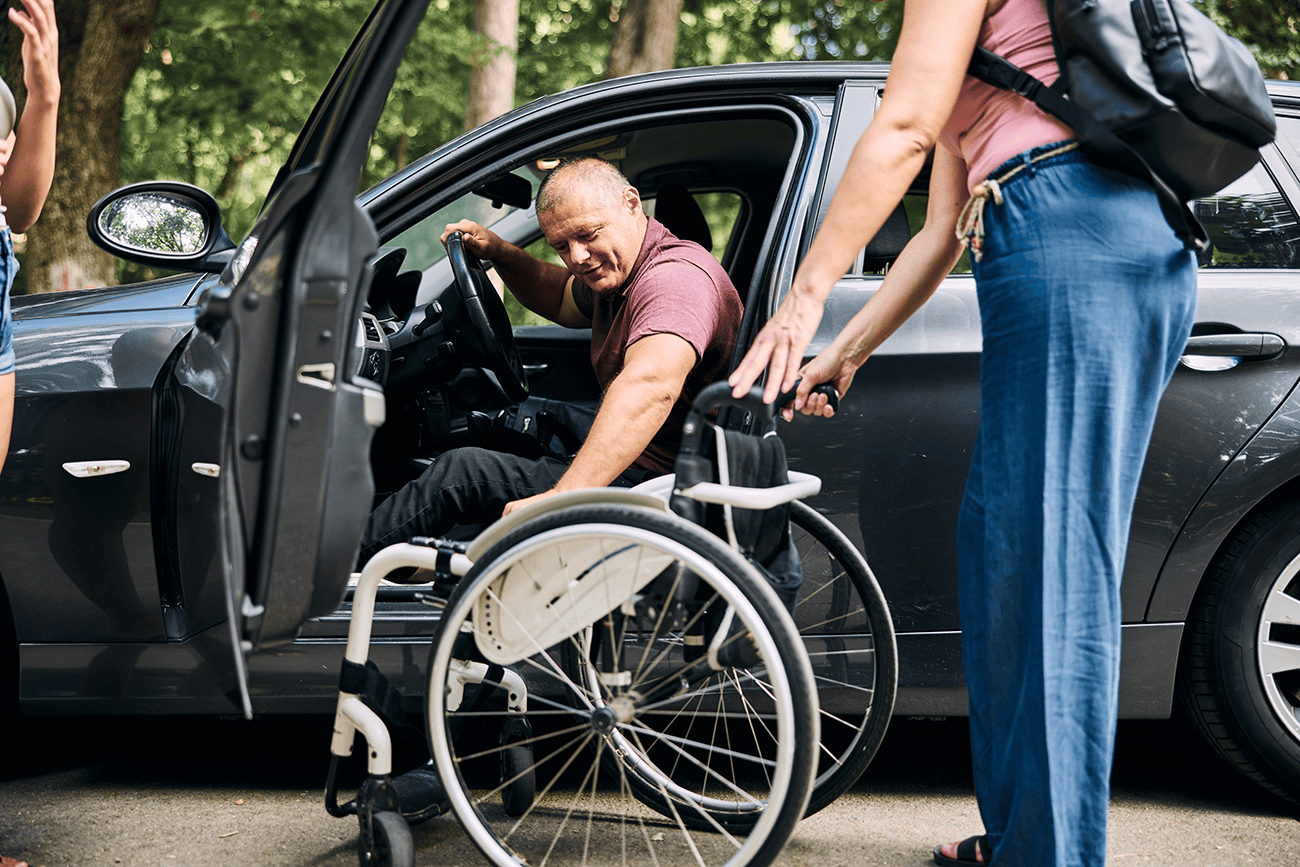
This year, Dovida developed and piloted a new Spinal Cord Injury Home Support Service for adults with spinal cord injury. Thanks to the project, a young man has been supported to move from a nursing home back to his home in Mayo and a man from the National Rehabilitation Hospital (NRH) has returned to his wife in Waterford.
The development of the service is timely, as Dr. Kathy McLoughlin, General Manager (Disability), who recently attended the National Rehabilitation Hospital conference explains:
“One of the most sobering themes to emerge at this year’s NRH conference was how preventable many delayed transfers of care are for people with spinal cord injury and acquired neurological conditions. Over and over, clinicians, managers, families, and people with lived experience, returned to the same point – people are medically ready to leave hospital or specialist rehabilitation units like the NRH, but they cannot be discharged safely, because essential care at home simply does not exist in the community. One of the issues that came up repeatedly was neurogenic bowel care – lack of nurses to do this in the community is a blocker to discharge for many people who have experienced a spinal cord injury.”
Training teams
Dovida recognised this as a major issue last year and worked with the National Rehabilitation Hospital to train their nurses across the country in the management of Neurogenic Bowel Dysfunction. Several of these nurses went on to complete the Train the Trainer programme with the NRH, with a view to training teams of Dovida Home Healthcare Assistants to perform the task under their delegated supervision.
Paula Trainor, National Enhanced Home Support Manager, and former HSE ADPHN, will oversee the scale up of the service for Dovida in 2026:
“For people with spinal cord injury, brain injury, and complex neurological conditions, bowel care is not an add-on; it is fundamental to health, dignity, participation, and safety. Without trained support in the community, people face very real risks – autonomic dysreflexia, recurrent infections, skin breakdowns, readmission to acute services, and significant psychological distress. Historically, this was a Public Health Nursing task, but their services are overstretched and PHNs seem to welcome Dovida’s efforts to support them to care for clients with spinal injury in the community”.
Human impact
Clinicians in facilities like the NRH, are often left in an impossible position knowing someone could and should be at home, but they are unable to sign off on discharge because the care pathway in the community is not there. The human impact of these delays cannot be overstated – weeks, months, even years in hospital when someone is clinically stable, erodes independence, confidence, and hope. People affected talk about regression, loss of routine, and the quiet despair of knowing their life is on hold because the system cannot organise the right support outside of the in-patient clinical ward setting.
Dr. Breda Moloney, nurse consultant, who supported Dovida to develop its Spinal Cord Injury Home Support Service, and who also evaluated the service, notes:
“The lack of access to timely neurogenic bowel care in the community is a structural gap in how complex care is delivered in the community. Dovida’s new spinal home care service has been explicitly designed to address this gap and support timely safe discharge. The service focuses on skilled care delivered by trained, competent caregivers who deliver neurogenic bowel care safely under the delegated clinical oversight of an NMBI registered nurse. One of the key benefits is that it is one dedicated team doing the enhanced care and the home support – so there is great continuity.”
Fundamental change
Danette Connolly, Dovida’s Director of Client Experience and Clinical Governance, explains that the recent pilots in Mayo and Waterford “demonstrated that when caregivers are fully trained, supported, and supervised, complex care can be safely delivered in the community, and it fundamentally changes what is possible for discharge planning. For people waiting in rehab right now, this isn’t about efficiency or allocation of resources, it’s about getting home, getting on with their life, being able to plan their day, see their family, sleep in their own bed and start rebuilding a life that makes sense again”.
For more information on Dovida’s Spinal Cord Injury Home Support Service, please contact Paula Trainor paula.trainor@dovida.ie.