

Blog
1 October 2026
International Day of Older Persons – The Age of Longevity begins at home
A special contribution to mark United Nations International Day of Older Persons 2026
by Dr Kathy McLoughlin
Director of Disability Services, Dovida Ireland
Last year my mother came home to die. She was 89, she had been in hospital, and she was clear about what she wanted: to be in her own house, in her own bed, with her own things around her. We brought her home believing we were arranging her last weeks.
She is 91 now. She is still at home. She has not been back to hospital since.
On October 1, the United Nations marks International Day of Older Persons under the theme ‘The Age of Longevity: Rethinking Systems for Longer Lives’. It is a theme that invites big questions about pensions, health budgets and demographics. The question I keep coming back to is smaller and, I think, more useful. What kept my mother out of hospital this past year? Because whatever it was, that is what the system should be built around.
Start with the person
The honest answer is that it was not one thing. Professor Helen Sanderson’s Support Sequence describes it better than I can. Start with the person. Then ask what family and friends can offer, then the community, then technology. Paid support comes last in the order of asking, not because it matters least, but because it should be shaped by everything around it.
My mother’s wish to be at home was the beginning of everything, and it still is. She decides how her day runs, when she wants company and when she wants quiet.
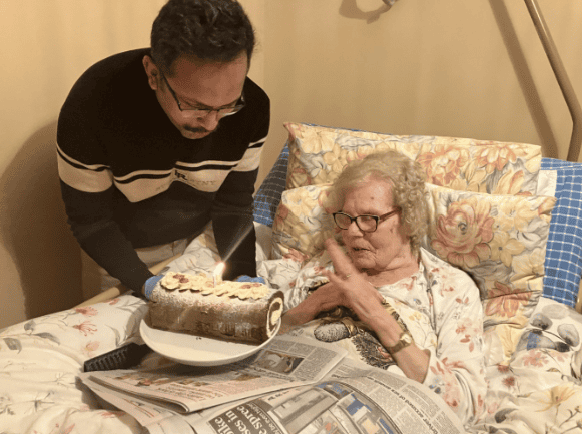
Then family. We are with her, and so, in a different way, are her children, grandchildren and great-grandchildren in the UK. She is still the person the family rings for news.
Then community. Our neighbours from the Indian community here, several of whom work in the local nursing home, have become friends of the family. Their kindness and their nursing skills have carried us through moments at home when we needed guidance and support. People ask for her in the church, the shop and on the street and many call in to visit, making the days a little shorter.
Then technology. A GrandPad sits on her lap, a simple tablet built for older people. Through it she sees the new babies – her great grandchildren – attends family weddings and her son’s funeral – and hears the news before we do. It allows her to stay, in every way that counts, a mother, grandmother and aunty.
Then paid support, and how it is delivered, matters
The last ring of the sequence is the one no family can build alone: her GP, the Public Health Nurses, ShannonDoc – her local after-hours GP services – who have come to the house in the middle of the night and judged that she could stay, and, most importantly, her Dovida home care team.
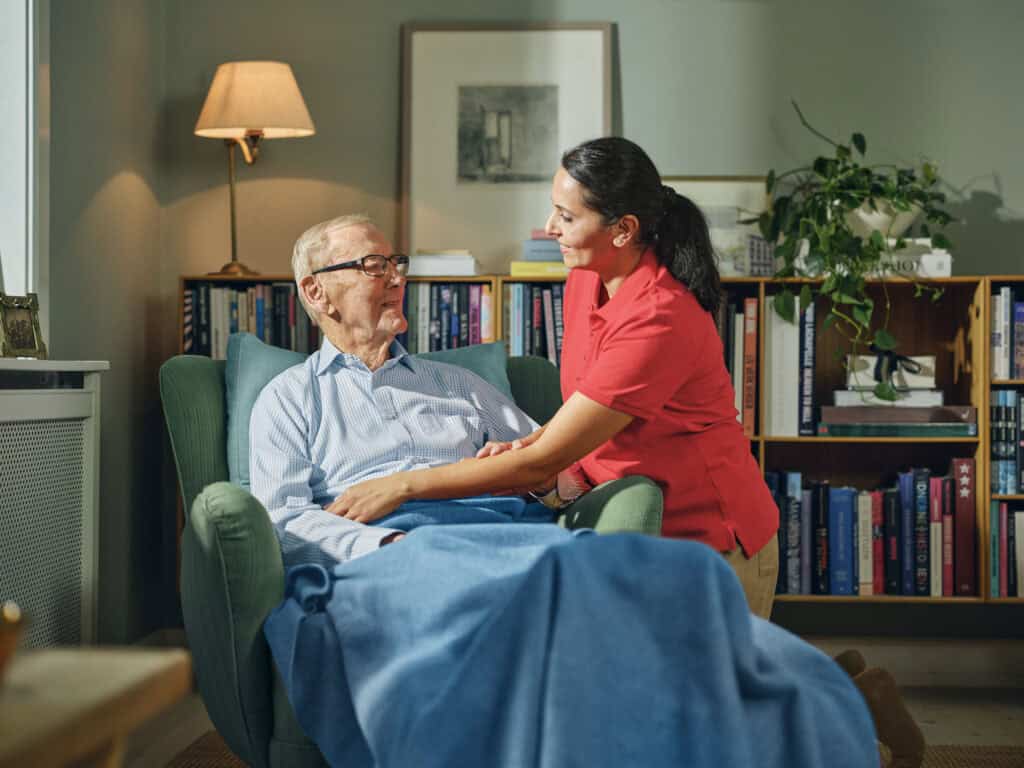
Paid support can be delivered as a list of tasks in a window of minutes – or it can be delivered as part of what Dovida calls the Circle of Care: my mother at the centre, and her Caregivers and care manager working with her GP, the public health nurse, Shannondoc, us and the neighbours as one connected group, rather than a set of visitors who never speak to each other. The difference between those two ways of delivering the same hours is the difference between my mother being at home and my mother being in hospital.
A statutory right to connected care
At the moment, the people of Ireland do not have a statutory right to home care. Home support is still largely allocated in hours and tasks rather than around the person and the people already beside them. Who qualifies, how much support follows and on what basis still vary from county to county. If my mother had lived somewhere else, with a different GP practice, no out-of-hours service prepared to call to the house and no funded home support, the default would have taken over. The default, still, is a hospital bed or a nursing home place.
In June this year, the Health (Amendment) (Home Support Providers) Bill passed. Providers like Dovida will register with HIQA, and standards will be set and inspected. Minister Kieran O’Donnell deserves great credit for this. But regulation only answers how well services are delivered. It does not answer who is entitled to them, how much, or what they are for. Those are the questions Dovida has been raising in our policy briefings, and they are the questions longevity makes urgent.
Rethinking the system
More of us will live into our nineties, for years rather than weeks, with the kind of need my mother has. Rethinking systems for longer lives should mean three things at once: support built deliberately around each person, from the inside out; a Circle of Care mobilised when paid support is required; and a statutory right that puts it within reach of everyone.
My mother came home to die. Instead, she is at home living her life, her way. The support that made that possible exists, in fragments, all over Ireland. The next chapter of reform is about making it whole and making it a reality for everyone in Ireland living in the age of longevity.